

How sediment disposal rules shape a channel dredging plan
A channel dredging plan is not defined only by target depth, production rate, and available plant. The destination of the dredged sediment can determine whether a technically feasible excavation program is permit-ready, affordable, and executable within the intended work window. Disposal rules govern what material may be removed, how it must be tested, where it may go, how it is transported, and what monitoring is required before, during, and after placement.
The practical consequence is simple: a disposal route must be developed at the same time as the dredging method. Treating sediment disposal as a downstream logistics issue often produces late redesigns—such as changing from direct pipeline placement to barging, adding dewatering capacity, separating material streams, or reducing the allowable dredging footprint after sediment results are reviewed.
Disposal classification sets the physical boundaries of the project
Regulators generally distinguish between material that may be beneficially used, material suitable for approved aquatic placement, material accepted by confined disposal facilities, and material requiring treatment or special handling. The names and legal tests differ by jurisdiction, but the planning effect is consistent: classification determines the viable disposal options.
A sediment investigation therefore needs to answer more than whether the channel can be dredged. It should establish the vertical and horizontal distribution of sediment types, including grain size, moisture content, organic content, debris, and any constituents relevant under the applicable permitting framework. In many channel projects, the most important finding is not a single average test result but the presence of a localized layer that cannot enter the planned disposal stream.
That distinction affects the excavation sequence. If clean sand overlies fine sediment with a different disposal designation, mixing the layers in the cutterhead, hopper, pipeline, or barge can compromise a route that would otherwise be available. The dredging plan may need separate production zones, depth controls, distinct transport cycles, or stockpiling arrangements that prevent commingling.
Sampling density matters because channel sediment is rarely uniform. Deposition patterns change near bends, berths, outfalls, tributary junctions, mooring areas, and low-energy reaches. A sampling plan that is adequate for broad authorization may still be too coarse for operational segregation. Before finalizing equipment spreads or production assumptions, the project team should compare the sampling grid and sample depths with the actual cut lines and planned dredging tolerances.
Permitting schedules are linked to disposal capacity, not only environmental review
Channel dredging approvals are often treated as a single permit milestone. In practice, the disposal destination can introduce separate approvals, site-specific acceptance conditions, seasonal restrictions, material volumes, and operational reporting obligations. An approved placement area is not automatically available for the full dredging volume at the required time.
Confined disposal facilities, for example, have finite storage capacity and may impose limits related to moisture, solids content, contaminant classification, or delivery method. An upland facility may accept mechanically excavated material but not high-water-content slurry without prior dewatering. An aquatic placement option may be restricted by environmental windows, turbidity requirements, placement elevation, or bathymetric capacity. Beneficial-use outlets may require tighter physical specifications than a disposal facility, such as limits on fines, debris, salinity, or unsuitable organic matter.
These constraints should be translated into a disposal capacity schedule. The relevant question is not merely whether a site has nominal capacity equal to the project volume. It is whether it can receive the planned daily or weekly volume, in the intended material form, through the available access route, during the permitted work period. A project that produces sediment faster than its receiving system can accept it will either need on-site buffer capacity or a lower production rate.
The disposal route influences dredger and transport selection
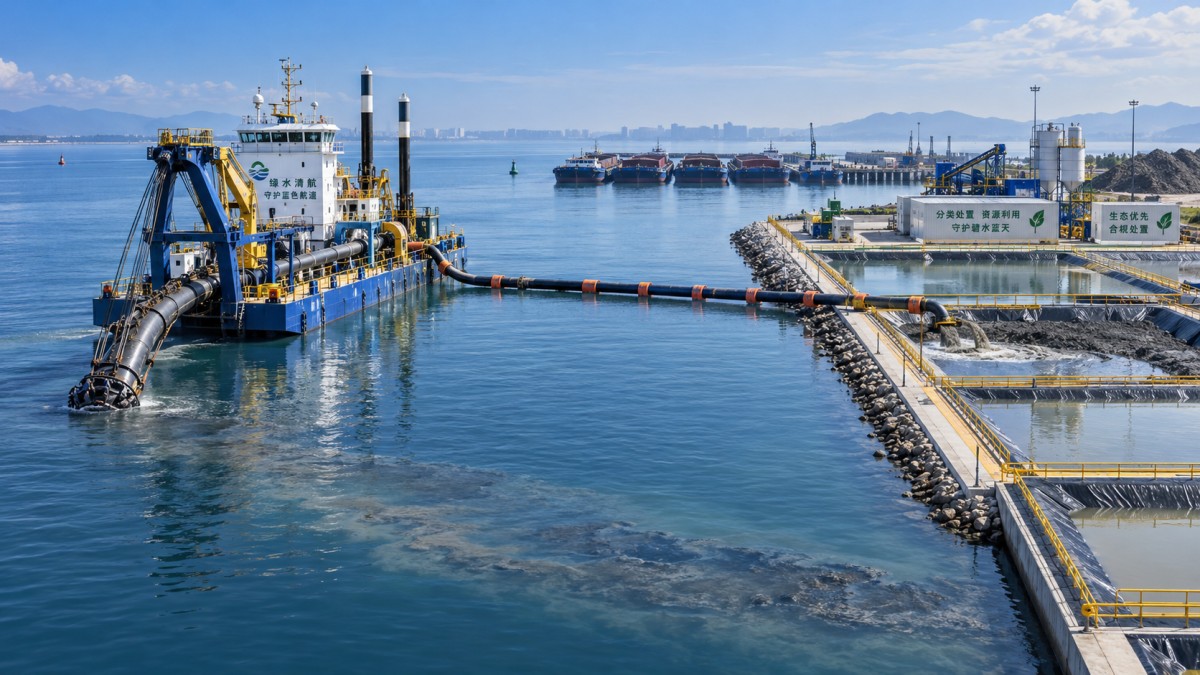
Equipment should be selected around the complete material chain: excavation, conditioning, transport, receiving, and placement. A cutter suction dredger can efficiently move sediment through a pipeline to a nearby placement area, but that arrangement depends on pipeline corridor permissions, booster requirements, containment design, and the receiving site’s ability to manage water return. It is less suitable where the authorized destination is distant, inaccessible by pipeline, or requires discrete loads with documented volumes.
Mechanical dredging with barges may offer better control when material must be isolated by zone or delivered to a confined facility. Yet the apparent flexibility comes with barge scheduling, loading limits, navigation constraints, transfer arrangements, and the risk of resuspension or leakage during transport. Where sediment is classified for special handling, enclosed barges, sealed containers, or controlled unloading procedures may be required by the approval conditions.
Trailing suction hopper dredgers can combine excavation and transport in suitable navigable settings, but their use is shaped by the permitted discharge or placement method. Hopper overflow, decanting, or pump-out procedures may be restricted where fines or regulated constituents are present. A high production rate is not beneficial if the disposal authorization limits the number of placement cycles or requires material to be offloaded at a facility that becomes the project bottleneck.
Specialized dredging equipment should not be evaluated solely by its excavation mechanism. A bucket-chain system, for instance, may support controlled recovery of coarse material in mining-oriented work, such as the 150TPH Bucket Chain Gold Diamond Dredger. That operating principle does not itself establish suitability for a navigation-channel project. For channel dredging, compatibility depends on the approved disposal route, sediment characterization, production control requirements, water-quality conditions, and the ability to segregate materials where required.
Water management is part of sediment disposal compliance
Disposal rules frequently address the water released from dredged material as directly as the solids themselves. Hydraulic placement introduces a large water volume into the receiving area. The plan must define where that water will settle, how it will be returned or discharged, how turbidity will be managed, and whether the return flow requires separate authorization.
Dewatering changes the project configuration rather than simply reducing haulage cost. It may require containment basins, geotextile tubes, presses, sedimentation systems, access for handling dried solids, and controls for filtrate. The resulting cake or stockpiled material may qualify for a different transport method, but it still must meet the receiving facility’s acceptance rules. Dewatering also adds time between excavation and final disposal, which should be reflected in the critical path.
For in-water placement, the plan must account for the release characteristics of the material. Fine-grained sediment, organic-rich mud, and material disturbed by unsuitable dredging methods can create a larger turbidity footprint than coarse sand. Compliance monitoring may require defined sampling locations, frequency, weather limitations, and stop-work triggers. These are operational limits, not administrative details: they can affect when work can proceed and how quickly a dredger can advance.
Material balance is the control document that connects permits to production
A usable channel dredging plan should maintain a material balance from the surveyed excavation volume through to final placement. It should distinguish in-situ volume, swell or bulking assumptions where applicable, water content, transport volume, and the authorized capacity of each destination. Without this reconciliation, apparent spare disposal capacity can disappear once the material is dredged, mixed with water, or dewatered.
The material balance should also identify decision points. If field observations show a change in sediment texture, odor, debris content, or color relative to the characterization record, the crew needs a documented escalation route before material is sent to an incompatible destination. The same applies when production records indicate that a confined site or beneficial-use outlet is approaching its permitted capacity sooner than expected.
Survey control is equally important. Pre-dredge and post-dredge bathymetry establishes excavation quantities, while disposal-site surveys or load records demonstrate placement volumes. For projects with multiple sediment classes, records should preserve the link between dredged reach, material classification, transport unit, and receiving location. This traceability is often essential when approvals impose separate volume caps or monitoring requirements.
Common planning errors create avoidable program risk
One recurring error is assuming that a historical disposal route remains available without checking current authorization conditions, capacity, and sediment acceptance criteria. Another is using average sediment data to select a disposal route where a limited volume of nonconforming material can affect the entire production stream. A third is procuring dredging capacity before confirming the receiving system’s throughput. In each case, the excavation plant may arrive ready to work while the disposal chain is unable to receive material.
Cost estimates can also be distorted when disposal is represented as a single unit rate. The cost structure changes sharply between direct placement, barge transport, confined disposal, dewatering, truck haulage, treatment, and beneficial use. Contingency should be tied to identifiable uncertainties—such as unclassified pockets, disposal-site availability, transport distance, or water-management requirements—rather than added as a generic percentage with no operational basis.
The strongest channel dredging plans treat disposal requirements as design inputs. They align sediment characterization with dredge zones, match production rates to receiving capacity, define how materials will be kept separate, and build permit conditions into daily operating controls. That approach does not eliminate environmental and logistical uncertainty, but it prevents disposal compliance from becoming the factor that determines the project schedule after mobilization has already begun.
