

How draft limits determine whether a dredge ship can reach the site
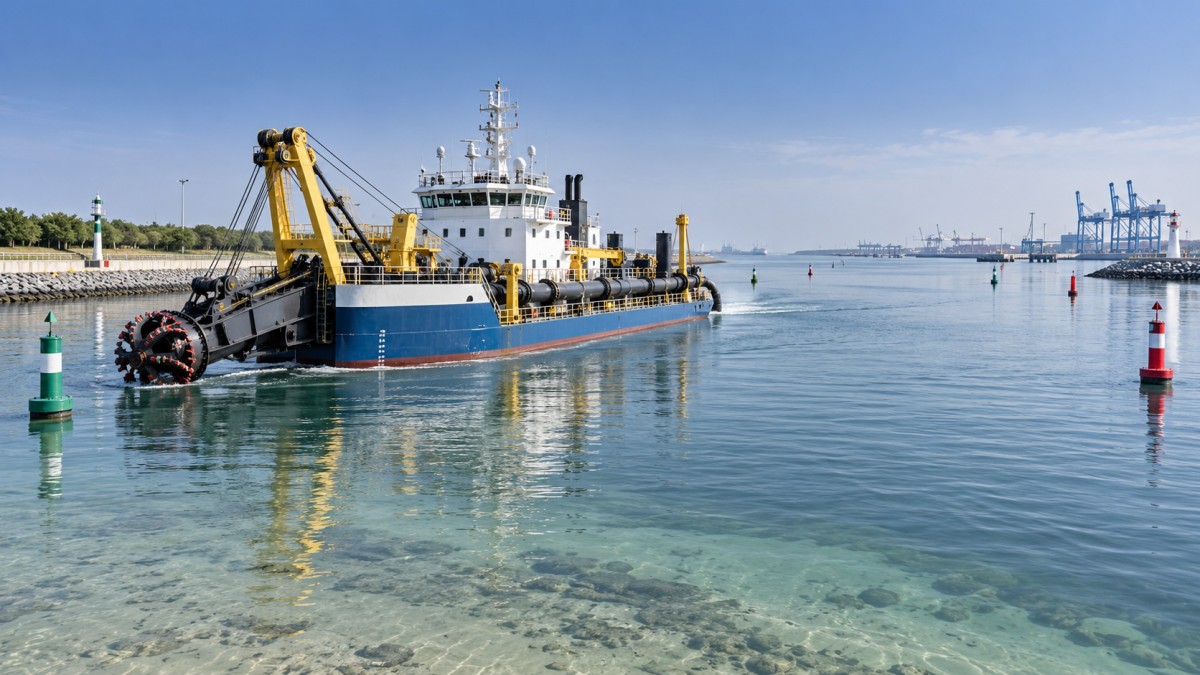
A dredge ship can reach a site only when its loaded operating draft, not just its brochure dimensions, fits the shallowest water it must pass through with a workable safety margin. That shallowest point may be a river entrance, an approach channel, a culvert crossing, a temporary berth, or the last section beside the dredging area. A vessel may have enough digging depth and pump capacity for the job but still be unable to arrive without grounding, waiting for high water, or requiring partial dismantling.
The practical decision is to compare the dredger’s draft in each transport and operating condition against the minimum available depth after allowing for tide, siltation, waves, heel, and navigation clearance. Draft limits should therefore be checked before selecting transport method, sizing the dredge ship, or committing to a mobilization schedule. Treating draft as a late-stage logistics detail is one of the fastest ways to create avoidable delays.
The access depth is rarely the depth shown on a chart
A site investigation may state that a channel is 2.5 m deep, but that number alone does not prove a dredger can use it. It may refer to an earlier survey, a particular water level, or a centreline that is deeper than the route a wide vessel must actually follow. Sediment deposits can move after rain, floods, vessel traffic, or prior dredging. In tidal areas, the available depth changes through the day. On exposed waters, short waves can make a marginal transit unsafe even when the nominal depth appears sufficient.
For access planning, start with the controlling depth: the least depth anywhere between the launching point and the working location. Then deduct the factors that reduce usable clearance. The result is the navigable depth available to the dredger, rather than an optimistic site figure.
Draft is not one fixed number
When people ask whether a dredge ship can reach a site, they sometimes ask for “the draft” as though it remains unchanged. In reality, the relevant figure depends on condition. A dredger may sit differently while being towed, while carrying onboard fuel and spares, while the ladder is raised, or while pontoons are configured for transport. A vessel with a nearly level static draft can also trim by the stern or bow when machinery, anchors, discharge pipe, and auxiliary equipment are arranged for travel.
Ask the equipment supplier for the draft and trim in the intended mobilization condition, not only a general hull drawing. Clarify whether the stated dimensions include optional equipment, spuds, side anchors, ladders, or transport supports. If the dredger is modular or dismountable, distinguish between the draft of the assembled vessel and the draft of individual modules being moved by barge, truck, rail, or sea transport.
Air draft matters as well. A shallow river route may pass beneath bridges, power crossings, pipelines, or overhead structures. The dredger can clear the bottom and still be blocked by the height of the cabin, mast, raised ladder, lifting gear, or temporary transport frame. Access approval should examine both vertical directions from the waterline.
Set a real under-keel margin before making the choice
Using available water depth equal to vessel draft is not an acceptable operating plan. Some margin is necessary because the bottom is irregular, readings are imperfect, and the vessel moves. The amount cannot be reduced to one universal value; sheltered water with a recently verified, level bed is different from a tidal estuary with currents, wave action, and shifting shoals.
The useful calculation is:
Required access depth = maximum transit draft + operating allowance + under-keel clearance allowance.
The operating allowance covers expected changes during the passage, such as trim, squat, motion, or a small change in load. Squat deserves attention where a vessel moves through restricted channels: water flow around the hull can cause it to sink slightly deeper and alter trim as speed increases. A slow, controlled transit may reduce the effect, but the route still needs adequate clearance.
Under-keel clearance is the residual gap between the lowest hull point and the bed. It protects against survey uncertainty and local high spots. Where the route contains rock, debris, old piles, or uneven dredged material, a depth sounding alone may not reveal every hazard. A narrow clearance that looks workable on paper can become a grounding event at the first bend or turning basin.
Route constraints often decide the equipment configuration
Draft is only one of several physical limits, but it often exposes the need for a different mobilization plan. A compact route may be deep enough at high water but too narrow for a safe turn. Another route may allow a floating hull to pass but prevent it from reaching the bank where pipe sections must be connected. In remote inland work, the selected access method can shape the whole dredger specification.
- Direct floating delivery: suitable when the continuous route has adequate depth, width, overhead clearance, turning room, and support facilities.
- Towed delivery at planned water levels: can work on tidal or seasonally variable routes, provided the schedule allows for transit windows and a protected holding area.
- Partial dismantling and overland transport: useful where a road or rail route avoids shallow passages, but loading points, lifting capacity, and reassembly space must be confirmed.
- Launch near the work area: may reduce waterborne access risk, although the launch location must safely handle hull weight, slope, ground bearing capacity, and connection of discharge lines.
Do not assume that using a smaller dredger automatically solves access issues. A smaller hull may draw less water, yet it may not meet production needs, discharge distance, digging depth, or soil-cutting requirements. The objective is to choose a configuration that reaches the site and performs the required work without relying on impractical operating conditions.
Match the dredger to the limiting route and the required work
Consider a sand dredging or sand filling assignment in a river, lake, dam area, or sheltered coastal location. The route may be shallow at the entrance, while the work zone itself is much deeper. In this situation, selection should begin with the access restriction, then test whether a candidate dredger can meet the production requirement after it arrives.
For example, the YLCSD450 Cutter Suction Dredger is designed for applications including river, lake, sea, dam, sand dredging, and sand filling. Its stated overall length with ladder raised is 37 m, breadth is 7.2 m, and dredging depth is 14 m. These figures are relevant to route and work planning, but they do not replace confirmation of the vessel’s actual transport draft, trim, local water levels, or turning space. Its dismountable, transportable design may offer an alternative where floating access is restricted, subject to the project’s lifting and assembly conditions.
Technical capability should be checked in parallel. A dredger intended to move slurry over a long pipeline needs enough pump performance for the planned discharge route, while cutter power and hydraulic arrangements must suit the material being excavated. Choosing solely around low draft can leave the site with a vessel that arrives easily but struggles to maintain the intended production pattern.
A practical pre-mobilization review
Before confirming shipment, assemble one route sheet that follows the dredge ship from delivery point to final working position. Include the route survey, water-level basis, bridge clearances, narrow points, bends, temporary moorings, launch area, and any crossings where pipe or support craft will be needed. A visual inspection close to mobilization is valuable where channels are known to change quickly.
- Obtain the equipment’s maximum transit draft and identify the lowest hull or appendage point in that condition.
- Verify the controlling depth with current information referenced to the actual expected water level.
- Apply a route-specific allowance for bottom variation, vessel motion, trim, and speed-related squat.
- Check width, bend radius, air clearance, current, and safe locations to wait or turn around.
- Decide whether the preferred route remains workable throughout the planned mobilization window, not merely at one favourable moment.
- Prepare an alternative transport or launch method before equipment dispatch if clearance is marginal.
A dredger should not be committed to a shallow route on the assumption that minor grounding is harmless. Grounding can damage hull structures, interrupt towing, complicate insurance and recovery arrangements, and delay the start of work. Where the calculation leaves little margin, confirm the route with a hydrographic survey and assess the planned transit with the responsible marine and site teams. The right decision may be a different launch point, a timed passage, temporary access dredging, or a transportable dredger configuration rather than forcing a full assembled vessel through inadequate water.
